AI Data Center Financing: Power and Credit Come First
The AI data-center boom is creating one of the largest capital-formation opportunities in modern commercial real estate.
It is also exposing a fundamental misunderstanding.
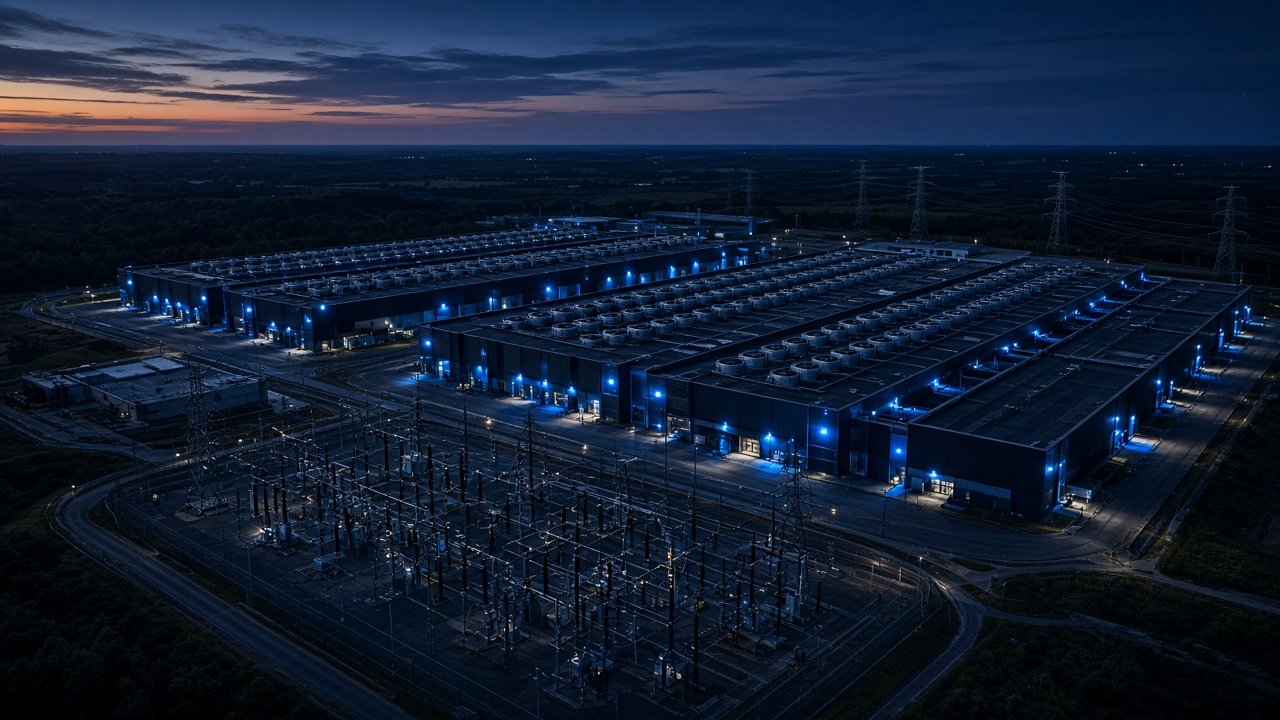
A data center is not simply an industrial building filled with servers. It is a coordinated investment in land, power, cooling, fiber, specialized equipment, construction capacity and long-term customer credit.
That distinction is becoming clearer as transactions grow larger. Nvidia is investing $1 billion in Naver while Brookfield provides up to $9 billion to expand a South Korean AI facility. A BlackRock-backed consortium recently completed a $40 billion data-center acquisition and committed another $5 billion for growth.
At the same time, some proposed developments are being delayed or abandoned because of power constraints, community opposition and uncertain execution.
For developers, capital raisers, family offices and commercial lenders, the lesson is straightforward:
The AI opportunity may be enormous, but capital will favor projects that can prove access to power, construction readiness and dependable repayment—not merely demand for computing capacity.
Data-center financing is moving to a new scale
On July 27, Reuters reported that Nvidia will purchase $1 billion of newly issued Naver shares, giving the chipmaker a 4.5% ownership position.
Brookfield will provide up to $9 billion as the capital partner for the related data-center expansion.
The project is expected to develop 200 megawatts of capacity at Naver’s GAK facility in Sejong, South Korea, by 2028. It will use Nvidia’s Blackwell and Vera Rubin platforms and represents the first stage of a broader gigawatt-scale infrastructure strategy.
Another transaction demonstrates the institutional demand for established operators.
A BlackRock- and MGX-backed consortium completed its $40 billion acquisition of Aligned Data Centers and committed an additional $5 billion in growth capital. Aligned has 51 campuses and more than 6.4 gigawatts of operating and planned capacity. The investor group expects to deploy $30 billion of equity initially, with the total potentially reaching $100 billion when debt is included, according to Reuters’ July 21 report.
These are not conventional property transactions.
They combine characteristics of commercial real estate, infrastructure, corporate finance, private equity, equipment financing and project finance. Capital providers must evaluate whether every part of the system will be available when the facility needs it.
Power has become the new location
Traditional commercial real estate underwriting begins with location.
For an AI data center, the most important element of location may be deliverable electricity.
A site can have affordable land, favorable zoning and access to fiber while remaining economically unusable if the power cannot be delivered on schedule.
The latest Lawrence Berkeley National Laboratory analysis estimates that U.S. data centers could consume 11.8% of the country’s electricity by 2030, with plausible scenarios ranging from 9.5% to 15.3%. Its reference case estimates annual data-center consumption of 649 terawatt-hours. The June 2026 report reflects the increasing number and intensity of AI servers, along with the cooling systems required to operate them.
Developers should therefore distinguish between several very different claims:
- Power is located somewhere near the site.
- A utility has included the project in a preliminary study.
- Interconnection capacity has been assigned.
- Required grid upgrades have been identified and funded.
- A binding service agreement has been executed.
- Redundant, reliable power will be available by the required operating date.
Only the later stages provide meaningful financing certainty.
Capital providers will want to understand:
- Total megawatts required by phase
- The scheduled energization date
- Utility and interconnection agreements
- Grid-upgrade obligations
- Power pricing and escalation
- Backup generation and storage
- Redundancy requirements
- Fuel availability for onsite generation
- Exposure to curtailment
- Responsibility for transmission and substation costs
- Consequences if power delivery is delayed
A development schedule based on an informal power indication is not the same as a financeable project.
The capital stack must match the assets
The AI data-center capital requirement does not occur all at once.
Different expenditures create different risks and may require different financing sources.
Land and predevelopment capital
Early capital may be needed for site control, engineering, utility studies, environmental work, zoning, design and deposits.
This stage carries significant entitlement and execution risk. Traditional lenders may provide limited leverage until the sponsor can demonstrate that the property can actually support the planned development.
Sponsor equity, joint-venture equity or carefully structured private capital may therefore play a larger role.
Construction financing
Once permits, power arrangements, budgets and customer commitments are sufficiently advanced, construction debt may finance the building, cooling systems, electrical infrastructure and related improvements.
The lender will examine the contractor, guaranteed-maximum-price agreement, completion schedule, contingency, insurance and responsibility for cost overruns.
Equipment financing
Servers, networking systems, backup generators and cooling equipment may have different useful lives and collateral characteristics than the underlying property.
Equipment financing, leasing or vendor-supported structures can reduce the amount of capital that must be funded through the real estate loan. However, lenders must agree on lien priority, access rights and what happens to specialized equipment after a default.
Permanent and institutional capital
After completion and stabilization, the project may become eligible for lower-cost permanent debt, securitization or institutional infrastructure capital.
That exit cannot be assumed.
It depends on operating performance, tenant credit, remaining lease term, power economics, equipment relevance and capital-market conditions at the time of refinancing.
The strongest capital stack assigns each risk to a financing source equipped to understand and price it.
Credit support is becoming as important as collateral
The physical facility may cost billions of dollars, but lenders are also underwriting the customer’s ability to honor a long-term lease or capacity agreement.
That is particularly important when the project is built for a single tenant.
The Wall Street Journal reported that Nvidia was discussing approximately $250 billion of financing guarantees connected to a proposed OpenAI data-center development in Ohio. The planned project could involve 10 gigawatts of capacity and more than $500 billion in total costs, including chips.
Reuters noted on July 27 that it could not independently verify those discussions. Even so, the reported structure illustrates an important financing principle: lenders may require substantial credit enhancement when the underlying customer has enormous future obligations but limited current profitability.
Data-center lenders and investors will examine:
- The tenant’s financial strength
- Parent-company or third-party guarantees
- Lease commencement conditions
- Minimum-capacity commitments
- Termination rights
- Rent and power-cost escalation
- Security deposits or letters of credit
- Responsibility for unused capacity
- Renewal and expansion options
- Customer concentration
- Replacement demand if the original tenant defaults
A long lease has limited value if the party responsible for payment cannot support the obligation.
Likewise, a guarantee should be evaluated based on the guarantor’s actual financial capacity, competing commitments and the circumstances under which the guarantee can be enforced.
Community acceptance is now a financing issue
Data-center projects can promise construction employment, tax revenue and investment. They can also create concerns about electricity prices, land use, water consumption, noise, transmission infrastructure and local development priorities.
Only 14% of respondents to a June Reuters/Ipsos poll said they would support a technology-company data center being constructed in their community.
Blackstone CEO Stephen Schwarzman recently said the firm is addressing these concerns through union employment, workforce training, water-free cooling, additional power generation and local investment. Yet QTS, a Blackstone-owned data-center operator, terminated a Virginia development after years of planning, opposition and litigation, according to Reuters’ July 23 coverage.
This turns community relations into a measurable financing risk.
A project can lose considerable value if opposition delays zoning, imposes new operating restrictions or prevents required infrastructure from being constructed.
Before committing capital, sponsors and lenders should evaluate:
- Local political support
- Zoning and land-use approvals
- Environmental requirements
- Water and cooling design
- Noise and visual-impact mitigation
- Tax incentives and community obligations
- Transmission routes
- Litigation risk
- Local workforce availability
- Impact on residential utility customers
Community engagement should begin before the financing closes—not after opposition becomes organized.
Developers need an evidence-based financing package
The scale of AI investment can make almost any data-center proposal sound promising.
Capital providers will look past the market narrative and examine whether the specific project can be delivered.
A credible financing package should include:
- Site-control documentation
- Zoning and entitlement status
- Detailed utility correspondence
- Executed or pending power agreements
- Fiber connectivity
- Water and cooling requirements
- Engineering and environmental reports
- Phase-by-phase development budget
- Construction schedule
- Contractor and procurement strategy
- Equipment specifications
- Tenant commitments
- Sources and uses of capital
- Sponsor experience and liquidity
- Base, downside and delayed-completion cases
- Primary and secondary repayment sources
- Permanent-financing or sale strategy
The downside analysis deserves particular attention.
Sponsors should model what happens if power is delivered late, construction costs increase, equipment becomes obsolete sooner than expected or the tenant does not occupy the entire facility on schedule.
Capital becomes easier to underwrite when the sponsor has already confronted the questions that could undermine repayment.
Private investors should separate AI demand from project quality
Family offices and private-credit investors may find compelling opportunities in data-center construction, equipment finance, power infrastructure and bridge capital.
However, broad confidence in AI does not automatically make a specific loan or property attractive.
Investors should determine:
- Whether the site has real—not speculative—power rights
- Which milestones must be reached before capital is advanced
- What collateral secures the investment
- Whether specialized equipment has meaningful resale value
- Who absorbs construction overruns
- Whether the tenant commitment is enforceable
- How concentrated the repayment source is
- What happens if technology changes
- Whether reserves cover delays
- Whether the exit depends on additional capital being raised
- Whether the return adequately compensates for illiquidity and execution risk
Milestone-based funding can provide important protection. Capital can be released as entitlements, power agreements, construction targets, tenant commitments and other conditions are satisfied.
The highest advertised return may not be the best opportunity.
A more valuable transaction may offer a moderate return supported by seniority, controlled disbursements, strong credit enhancement and several repayment paths.
The Apex perspective: finance the full system
At Apex Commercial Funding, we view AI data centers as integrated infrastructure transactions—not ordinary property loans.
The financing strategy must account for the relationship among:
- Land
- Power
- Construction
- Cooling
- Equipment
- Tenant credit
- Operating performance
- Community acceptance
- Permanent capital
If one essential component is not ready, financing the others may increase risk rather than advance the project.
Depending on the development stage, an appropriate capital plan may involve joint-venture equity, private credit, bridge financing, construction debt, equipment financing, infrastructure capital or a blended structure.
The objective is not to finance the largest announced project.
It is to finance a project whose milestones, collateral, counterparties and repayment sources are sufficiently clear for serious capital partners to support.
Position the project before pursuing capital
AI infrastructure investment is accelerating, but capital will become more selective as transaction sizes grow and unsuccessful projects reveal where assumptions were too aggressive.
Developers should confirm power, define the capital stack and identify execution risks before approaching the market. Investors should require evidence that the project can be built, occupied and refinanced—not merely that demand for artificial intelligence is increasing.
If you are developing, acquiring or financing a data center or related infrastructure project, Apex Commercial Funding can help evaluate the capital requirement, strengthen the transaction presentation and identify financing structures aligned with the project’s actual stage and risk.
Contact James Fillmore II at James@apexcommercialfunding.com or 240-535-9291 for a confidential capital discussion.
Financing and investment opportunities are subject to underwriting, due diligence, lender requirements, applicable laws and final approval. This article is informational and does not constitute an offer of credit or securities, legal advice or investment advice.
Hashtags: #DataCenters #AIInfrastructure #CommercialRealEstate #PrivateCredit #InfrastructureFinance #CapitalRaising #CommercialLending #FamilyOffices #ApexCommercialFunding